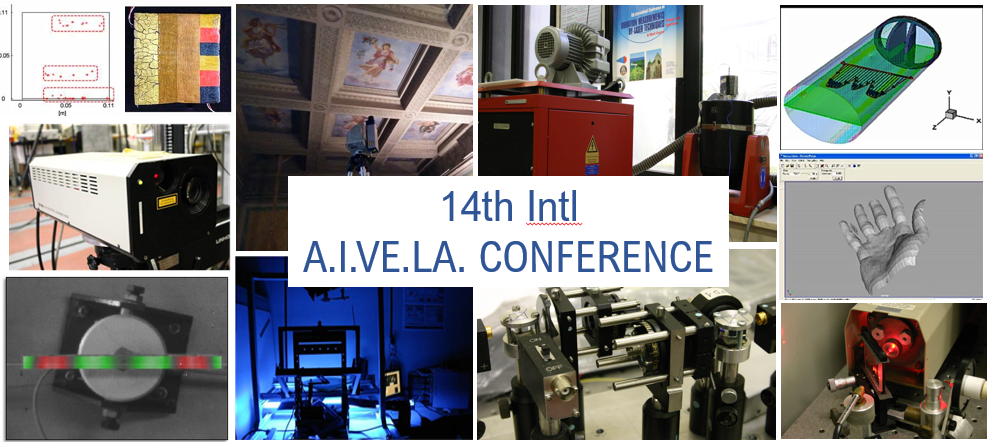
14th Intl Conference on Vibration Measurements by Laser and Noncontact Techniques
Online
Organised by
in collaboration with

Presentation
with the participation of
PRESENTATION
The International Conference on Vibration Measurements by Laser Techniques was first held in October 1994 and since its very first edition it has met large consensus among the International Research Community.
The Conference aims at creating an active and stimulating forum for sharing current research results and technical advances and for promoting the development of new systems for laboratory use, field testing and industrial applications.
For this reason, experts in vibration and acoustics, manufacturers and authorities in the field of optical and non- invasive instrumentation and industrial users of such measurement devices have come from all over the world to present their activities and innovative approaches to vibration measurements.
In 2010 the Scientific Commitee decided to broaden the topics dealt with by the event by including also noncontact measurement techniques, to offer a more complete overview.
The 2021 edition of the event will be held online due to the COVID-19 pandemic.
Call for Papers
Papers are sought on every aspect of Vibration Measurements by Laser and Noncontact Techniques.
Click here for the list of Measurement Techniques and Application Areas given as guidance.
The deadline for abstract submission is 31st May 2021.
Extended abstracts on the topics of the conference must be sent to the Conference Secretariat together with the Pre- Registration Form.
Abstracts should include:
1. Title of paper;
2. Full names of all Authors (the name of the Presenting Author must be underlined);
3. Affiliation;
4. Text (about 500 words plus supporting figures).
Authors are requested to send their abstracts by e-mail to: aivela@univpm.it.
Notification of abstract acceptance and instructions for manuscript preparation will be provided by 4th June 2021.
Please, note that one author per paper is required to register and attend the Conference.
For each additional paper, an extra fee of €60.00 will be charged.
PROCEEDINGS
The proceedings will be published in electronic format after the event by an internationally renowned Publishing House and indexed in the leading databases of scientific & engineering literature, including SCOPUS, ISI Web of Science, etc. Further details will be available shortly .
The deadline for full manuscript submission is 31st August 2021.
LANGUAGE
The official language of the Conference is English.
• Laser Doppler Vibrometry: Single-point LDV, Scanning LDV – 1D/3D, Continuous Scanning LDV, Tracking ..LDV, Fiber Optic LDV, In-plane LDV, Torsional LDV, Differential LDV
• Full Field Interferometric Techniques
• Holographic Techniques
• Electronic Speckle Pattern Interferometry (ESPI)
• Sherearography
• Speckle Techniques
• Vision Based Techniques: Digital Image Correlation – DIC, High Speed Vision, Videogrammetric Techniques, ..Structured Illumination
• Optical Sensors: Triangulation Sensors, Fiber Optic Sensors, Non- Interferometric Techniques, Fiber Bragg ..Gratings, Blade Tip Timing, Radar Laser
• Microwave Interferometry: Radar Based Techniques, Continuous Wave, Stepped Frequency (CW-SF),..Continuous Wave Frequency Modulated (CW-FM)
• Ultrasonic Techniques: Non Contact Ultrasonic Probes, Laser Ultrasonics
• Thermoelasticity
• Photoelasticity
• Signal Processing Techniques
• Microscopic Laser-Doppler Vibrometry
• Multi-Channel LDV
• New Components for LDV
• Photonics Integrated Circuits for LDV
• Techniques to Avoid Speckle Effects
• Parameter Identification from LDV-Data (LDV Spectroscopy)
• Vibration Detection in Optical Coherence Tomography
• Technical Solutions for Sub-Femtometer LDV.
APPLICATION AREAS
• Acoustics
• Active and Passive Noise & Vibration Control
• Vibro-acoustic and Noise, Testing, Noise Vibration Harshness NVH and Control
• Modal Analysis
• Metrology, Calibration and Standards
• Non Destructive Testing and Damage Detection: Condition Monitoring, Diagnostics, Maintenance, Quality Control
• Industrial Diagnostics and Quality Control
• Civil Structures and Infrastructures: Bridges, Dams, Tunnels, Buildings, Towers, Environmental Noise, Diagostic, Safety Assessment
• Laser in Art Conservation: Frescoes, Mosaics, Statues, Wooden Artworks
• Vibrations and Health: Lasers in Biomedical Applications, Ergonomics
• Laser Measurements in Microsystems & Nano Technologies: MEMS, Electro-Optical Microsystems, Smart Structures, Smart Materials, Biomedical Microsystems
• Transport: Noise Vibration Harshness NVH Comfort Safety: Automotive, Aeronautics, Rail Transportation, Maritime, Aerospace
• Security: Applications Against Fraud, Defence ApplicationsI
• Rotating Machinery: Turbomachinery, Windmill Generators, Propellers, Fans
• Vulcanology, Hearthquake Engineering
• Noise & Vibration in Agriculture
• Food Processing
• Industrial Process Monitoring and Control: Robotics Processing, Machinery, Assembly Systems, On-line Quality Control, Packaging
• Electromobility
• Gravitational Wave Detection
• Cavity Optomechanics
Invited Lectures
INVITED LECTURE
“ADVENTURES in LASER VIBROMETRY: TAKING the ROUGH with the SMOOTH“
by Prof. Steve J. Rothberg, Loughborough University, UK
 Steve Rothberg is Professor of Vibration Engineering and a Fellow of the Institution of Mechanical Engineers. With a first degree and a PhD from Southampton University, he joined the academic staff at Loughborough in 1990 as an industrially funded lecturer. His research in noise and vibration measurement and analysis, particularly in the development of laser technology for vibration and motion measurements, has attracted individual awards from the National Physical Laboratory and the Society of Experimental Mechanics, and contributed to Loughborough’s Queen’s Anniversary Prizes for Optical Engineering (2000) and High Value Manufacturing (2014). Much of this work has been conducted in collaboration with companies in the instrumentation, sporting goods and automotive sectors. His longstanding commitment to innovation in teaching includes founding the university’s Centre for Engineering and Design Education in 1997. In 2007, after six successful years as Head of Mechanical and Manufacturing Engineering, Steve became Dean of the Faculty of Engineering.
Since 2015, he has been Pro Vice-Chancellor (Research).
KEYNOTE LECTURE
“CONTINUOUS SCANNING LASER VIBROMETRY: from THREE-DIMENSIONAL and ROTATING STRUCTURE VIBRATION MEASUREMENTS to STRUCTURAL DAMAGE DETECTION“
by Prof. Weidong Zhu, University of Maryland, Baltimore County, USA
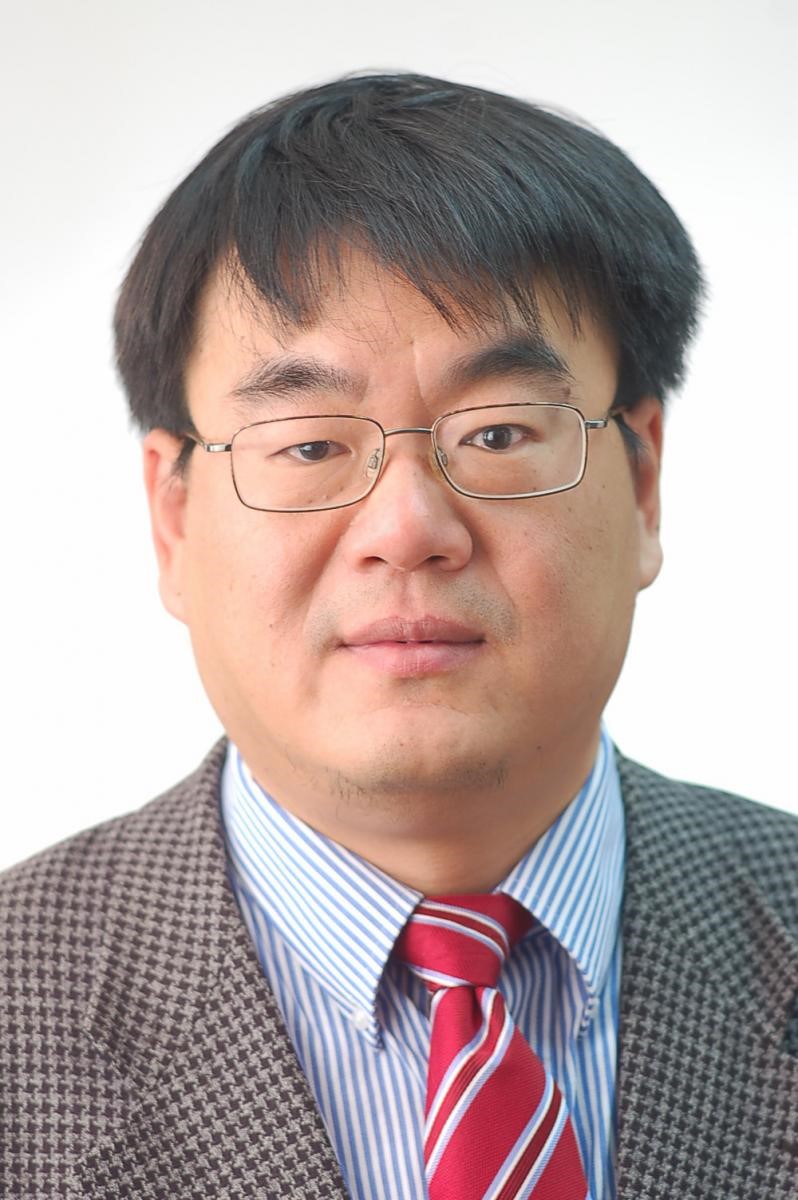 Weidong Zhu is a Professor in the Department of Mechanical Engineering at the University of Maryland, Baltimore County, and the founder and director of its Dynamic Systems and Vibrations Laboratory and Laser Vibrometry Laboratory. He received his double major BS degree in Mechanical Engineering and Computational Science from Shanghai Jiao Tong University in 1986, and his MS and PhD degrees in Mechanical Engineering from Arizona State University and the University of California at Berkeley in 1988 and 1994, respectively. He is a recipient of the 2004 National Science Foundation CAREER Award. He has been an ASME Fellow since 2010, and has served as an Associate Editor of the ASME Journal of Vibration and Acoustics and the ASME Journal of Dynamic Systems, Measurement, and Control, and as a Subject Editor of the Journal of Sound and Vibration and Nonlinear Dynamics. His research spans the fields of dynamics, vibration, control, applied mechanics, metamaterials, structural health monitoring, and wind energy, and involves analytical development, numerical simulation, experimental validation, and industrial application. He has published 220 SCI-indexed journal papers in these areas and has five issued U.S. patents. He is a recipient of the 2020 University System of Maryland Board of Regents Faculty Award for Excellence in Research.
Manufacturers Tutorials
 “Advancements in Laser Doppler Vibrometry”
held by Dr. Jochen Schell and Joerg Sauer, Polytec GmbH
The tutorial will give an insight into the benefits of new technological developments in the field of interferometry.
The first part will cover the mitigation of speckle effect induced noise features by a novel multi-path interferometer utilizing diversity combining. The application in modal analysis will be demonstrated and an outlook to continuous scanning techniques will be given.
The second part is focused on the exploitation of the transparency of infrared laser light with silicon.
The tutorial will show the expansion of microscopic scanning Laser Doppler Vibrometry to capped MEMS devices for the characterization of their dynamic behavior in situ. For both technologies, the theoretical background is laid out followed by real experiments.

“Modal Analysis: Upgrading basic DIC hardware to resolve high temporal resolution measurements”
Guven Ogus, Lukas Wittevrongel, Pascal Lava, MatchID, Belgium
Advanced mechanical research and development institutions and industries utilizes experimental modal analysis by physical measurements to validate designs extensively. The traditional validation method for vibration analysis and consequently extracting mode shapes is measuring the dynamic response of a structure using contact transducers (accelerometers, strain gauges, load cells, …) or pointwise high temporal resolution laser scanning methods. Digital image correlation (DIC) is of interest in this field. Contrary to these methods’ point-wise data, it provides full-field data enhancing the spatial resolution of a measurement. A drawback of DIC methods is that the temporal resolution is limited by the physical camera hardware specifications. On the one hand, higher frequency vibrations require expensive high-speed camera equipment which generally lack of spatial resolution compared to standard machine vision cameras. On the other hand, simple machine vision cameras with frequencies up to 100Hz lack the temporal resolution to capture high frequency dynamic behavior.
In this study, aim is to investigate a novel method to upgrade high spatial resolution but low temporal resolution machine vision cameras to a high-speed camera temporal resolution level, keeping the high spatial resolution. The method uses sub-sampling of a repeatable vibration event over several periods of the dynamic motion. The novel method is validated on a flat, thin vibrating plate hereby benchmarking with high temporal resolution results. The obtained modal frequencies and mode shapes by this sub-sampling experiment are validated through high-speed camera tests in the determined frequencies.
Special Sessions
– METROLOGY, CALIBRATION & STANDARDS
developed by Prof. L. Zhang, Changcheng Institute of Metrology and Measurement, China
– NEW TECHNIQUES for LASER-DOPPLER VIBROMETRY
developed by Prof. Christian Rembe, Clausthal University of Technology, Germany.
Final Programme
MONDAY, 28th June | |
09.10 | WELCOME by Prof. E.P. Tomasini, Polytechnic University of Marche, Italy |
09.20 | TUTORIAL |
10.00 | Session 1: METROLOGY, CALIBRATION & STANDARDS developed by Prof. L. Zhang, Changcheng Institute of Metrology and Measurement, China |
11.20 | BREAK |
11.40 | INVITED LECTURE “Adventures in Laser Vibrometry: taking the rough with the smooth“, Prof. Steve J. Rothberg, Loughborough University, UK |
12.30 | BOOK PRESENTATION “Laser Doppler Vibrometry – A Multimedia Guide to its Features and Usage“, Proff. Enrico Primo Tomasini and Paolo Castellini, Polytechnic University of Marche, Italy |
12.45 | BREAK |
14.00 | Session 2: Session 2: NEW TECHNIQUES for LASER-DOPPLER VIBROMETRY I developed by Prof. C. Rembe, Clausthal University of Technology, Germany |
15.00 | Session 3: VISION BASED TECHNIQUES: DIGITAL IMAGE CORRELATION-DIC, HIGH SPEED VISION, VIDEOGRAMMETRIC TECHNIQUES, STRUCTURED ILLUMINATION |
16.20 | Session 4: LDV APPLICATION TO ADDITIVE MANUFACTURING |
16.40 | END of DAY 1 |
TUESDAY, 29th June | |
09.10 | WELCOME by Prof. E.P. Tomasini, Polytechnic University of Marche, Italy |
09.20 | Session 5: PRESSURE and SOUND PRESSURE MEASUREMENTS by means of VISION-BASED and OPTICAL TECHNIQUES |
10.20 | Session 6: CONTINUOUS and TRACKING LDV |
11.00 | BREAK |
11.20 | WEBINAR “Modal Analysis: Upgrading basic DIC hardware to resolve high temporal resolution measurements“, Guven Ogus, Lukas Wittevrongel, Pascal Lava, MatchID, Belgium |
11.50 | MANUFACTURERS’ PRESENTATIONS |
12.30 | BREAK |
14.00 | Session 7: NEW TECHNIQUES for LASER-DOPPLER VIBROMETRY 2 developed by Prof. C. Rembe, Clausthal University of Technology, Germany |
15.00 | KEYNOTE LECTURE “Continuous Scanning Laser Vibrometry: From Three-Dimensional and Rotating Structure Vibration Measurements to Structural Damage Detection“, Prof. Weidong Zhu, University of Maryland, Baltimore County, USA |
15.40 | Session 8: H2020 Marie Sklowska Curie project ECO- DRIVE |
16.20 | CONCLUDING REMARKS and FINAL GREETINGS |
Virtual Exhibition
A Virtual Exhibition will be organised in conjunction with the Conference to offer leading manufacturers of laser vibrometer systems, non contact instrumentation and systems for vibro-acoustic testing the possibility to bring their products and services directly to the attention of a selected audience.
Companies will have a dedicated space on the Conference website where they can publish:
- their name and logo
- their company profile
- hyperlinks to the company’s website, products, videos, news and social media accounts
- leaflets and images
Moreover, Exhibiting companies will have:
– their logo published in the Conference Programme
– the opportunity to present their corporate image and latest products within a special dedicated session of the Conference Programme.
Further information can be obtained by contacting the Meeting Secretariat at: aivela@univpm.it.
MEET OUR EXHIBITORS
Click on the image to download the brochure ⇓ | ||
Optomet GmbH
READ MORE |
| |
POLYTEC GmbH
READ MORE |
| |
SmarAct GmbH READ MORE |
| |





Online Participation
The 14th Intl AIVELA Conference will be held live on the Microsoft 365/Teams platform.
Presentations will be livestreamed on the days of the Conference and registered participants will be sent the links to access the Conference sessions by email.
Attendees
If you are a registered participant:
- Please, join the sessions at the scheduled time according to the Conference programme;
- Once you join a session, please be sure to switch your microphone and camera OFF;
- You will be allowed to make questions at the end of each presentation. Please, be sure to raise your hand if you want to ask a question (click on the “raised hand” symbol in Microsoft Teams). The Session Chair will allow you to make the question by calling your name;
- When you ask the question, remember to switch your microphone and camera ON;
- After the interaction with the speaker, please remember to switch your microphone and camera OFF.
Chairmen
If you are a Session Chair:
- At the time of the session, keep your camera and microphone switched ON, introduce yourself as Session Chair and start the session;
- Ask the first speaker to switch the microphone and camera ON and introduce him/her;
- Ask the speaker to share his/her screen and start the presentation. Please, remind the speaker the time available for the presentation: 15 mins + 5 mins for possible questions;
- After the presentation, please check if there are questions from attendees by looking at the “raised hand” symbols in the list of participants, allow participants (one at a time, by calling their name) to make their questions and receive the answers from the speaker. After question time, remind the speaker to switch the camera and microphone OFF.
Speakers
If you are a Speaker, go to the Presenting Author section for detailed instructions for your presentation.
Committees
SCIENTIFIC COMMITTEE
– E.P. Tomasini (Chairman), Marche Polytechnic University, Italy
– K. M. Abramski,Wroclaw Univ. of Technology, Poland
– M. S. Allen, Wisconsin-Madison, USA
– P. Avitabile, University of Massachusetts Lowell, USA
– D. Di Maio, University of Twente, the Netherlands
– J. Dirckx, University of Antwerp, Belgium
– A. Dräbenstedt, Polytec GmbH, Germany
– D.J. Ewins, Imperial College, London, BLADE, Bristol, UK
– B. Halkon, University of Technology Sydney, Australia
– S. Heyns, University of Pretoria, South Africa
– D.J. Inman, University of Michigan, USA
– A. Lohrengel, Clausthal University of Technology, Germany
– M. Martarelli, Marche Polytechnic University, Italy
– F. Mendoza Santoyo, CIO A.C., Mexico
– C. Niezrecki, University of Massachusetts Lowell, USA
– N. Paone, Marche Polytechnic University, Italy
– C. Rembe, Clausthal University of Technology, Germany
– D.J. Rixen, Technische Universität München, Germany
– J. Rohrbaugh, Washington University in Saint Louis, USA
– S.J. Rothberg, Loughborough University, UK
– J. Sauer, Polytec GmbH, Germany
– A. Styk, Warsaw University of Technology, Poland
– H. Van der Auweraer, Siemens Industry Software NV, Belgium
– S. Vanlanduit, Vrije Universiteit Brussel, Belgium
– J.F. Vignola, The Catholic Univ. of America, USA
– L. Zhang, Changcheng Institute of Metrology & Measurement, China
– W. Zhu, University of Maryland, USA
ORGANISING COMMITTEE
– M. Martarelli (Co-Chair), Marche Polytechnic University, Italy
– D. Di Maio, University of Twente, the Netherlands
– B. Halkon, University of Technology Sydney, Australia
– F. Mendoza Santoyo, CIO A.C., Mexico
– C. Rembe, Clausthal University of Technology, Germany
– S.J. Rothberg, Loughborough University, UK
– A. Sabato, University of Massachusetts Lowell, USA
– H. Van der Auweraer, Siemens Industry Software NV, Belgium
– L. Zhang, Changcheng Inst. of Metrology & Measurement, China
HONORARY COMMITEE
– A. Albertazzi G. Jr, Univ. Federal de Santa Catarina, Brazil
– J.R. Arruda, University of Campinas, Brasil
– A.K. Asundi, Nanyang Technological Univ., Singapore
– K. Bendel, Robert BOSCH GmbH, Germany
– D.B. Bogy, University of California, Berkeley, USA
– X. Carniel, Centre tech. Industries Mecaniques, France
– A. Chakari, LSP, Univ. L. Pasteur, Illkirch, France
– W. Decraemer, University of Antwerp, Belgium
– H.J. Foth, University of Kaiserslautern, Germany
– P. Guillaume, Vrkje Universiteit Brussel, Belgium
– N.A. Halliwell, Loughborough University, UK
– S.M. Khanna, Columbia University, New York, USA
– A.G. Mignani, IROE-CNR, Firenze, Italy
– L.D. Mitchell, former Virginia Tech., Blacksburgh, USA
– N. Okubo, Chuo University, Tokyo, Japan
– W. Osten, Universität Stuttgart, Germany
– G. Pedrini, Universität Stuttgart, Germany
– G.C. Righini, IROE-CNR, Firenze, Italy
– P. Sas, University of Leuven, Belgium
– H. Tiziani, University of Stuttgart, Germany
– R. van Es, Shell, The Netherlands
– H.J. von Martens, PTB, Berlin, Germany
– E. Wagner, Fraunhofer Inst. Physik. Messtech., Freiburg, Germany
Secretariat
For information about the event, please contact the Conference Manager:
c/o A.I.VE.LA.
Department of Industrial Engineering and Mathematical Sciences
Marche Polytechnic University
Via Brecce Bianche
Ancona, I- 60131
e-mail: aivela@univpm.it
Registration & Fees
To register for the Conference, participants are kindly requested to fill in and send the registration form together with the form for the consent to the treatment of personal data duly signed to the AIVELA Secretariat by e-mail: aivela@univpm.it.
Download the REGISTRATION FORM here.
Download the TREATMENT OF PERSONAL DATA FORM here.
PARTICIPATION FEES
| FEES for AUTHORS* | UP TO 11th JUNE | FROM 12th JUNE |
| REGULAR | € 250.00 | € 300.00 |
| STUDENT | € 180.00 | € 230.00 |
| EXTRA PAPER | € 60.00 | € 60.00 |
| FEES for NON-AUTHORS** | UP TO 11th JUNE | FROM 12th JUNE |
| REGULAR | € 150.00 | € 200.00 |
| STUDENT | € 100.00 | € 150.00 |
| EXHIBITOR | ||
| VIRTUAL EXHIBITOR | € 350.00 | € 350.00 |
* Fees for authors include the publication of 1 paper, the proceedings, membership to AIVELA for 2021-2022.
** Fees for non-authors include the proceedings, membership to AIVELA for 2021-2022.
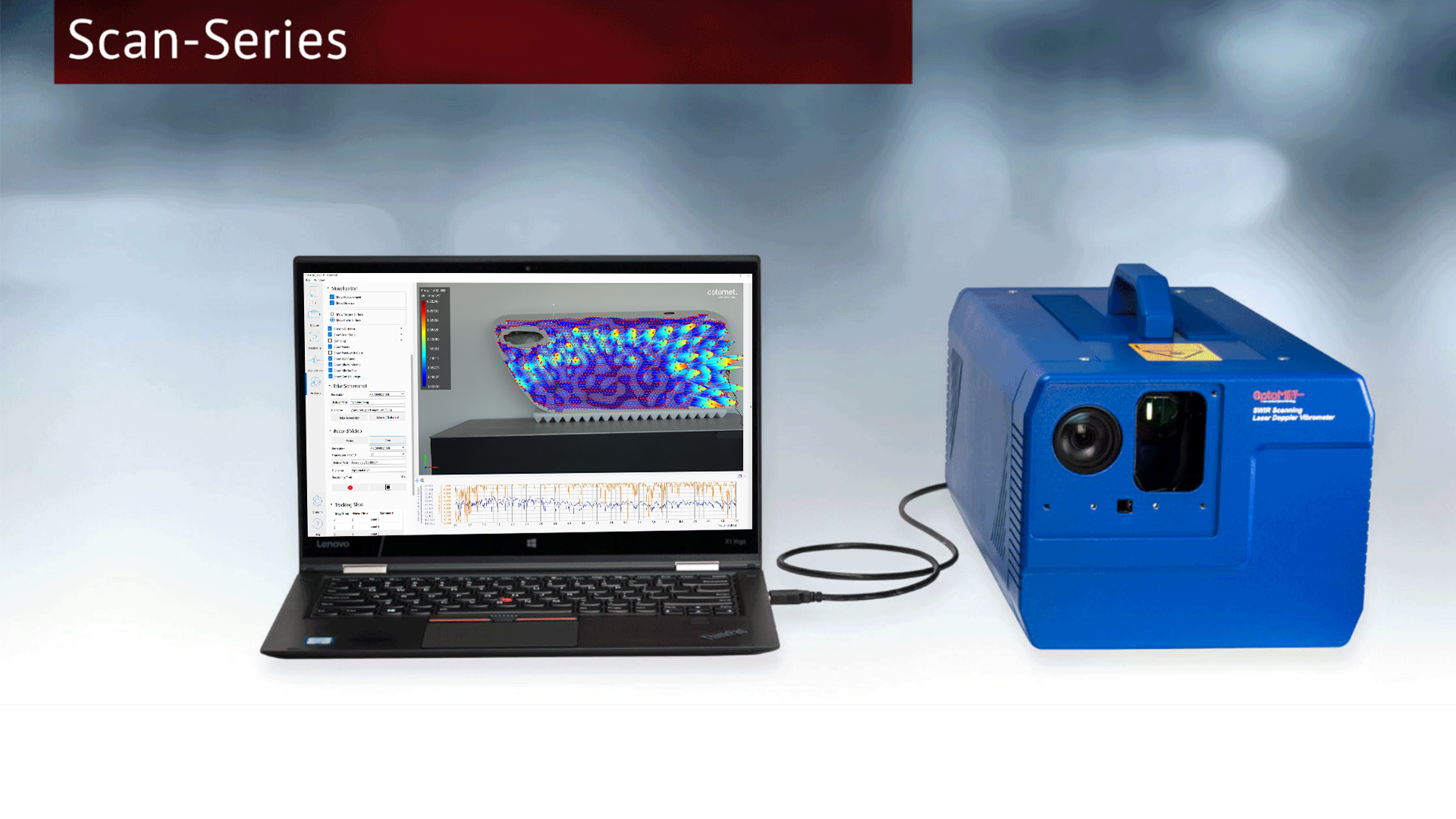
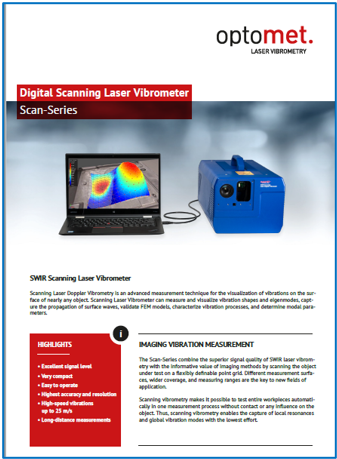
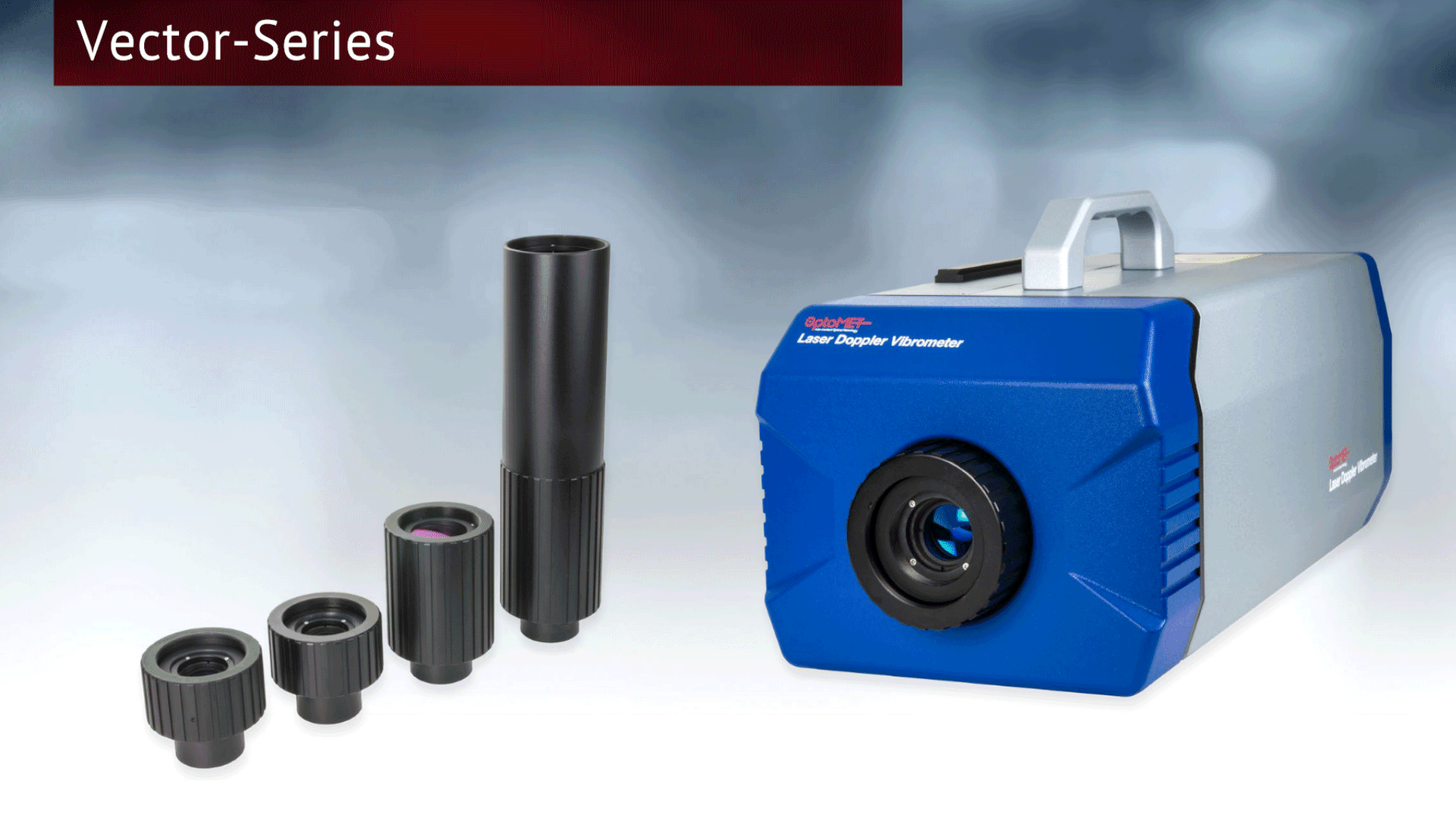
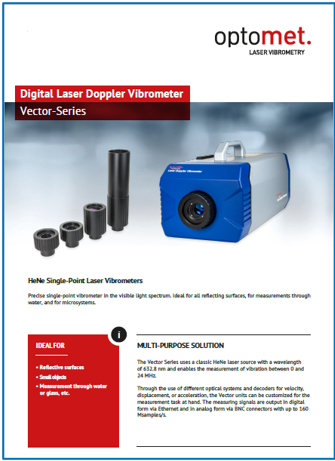
Optomet
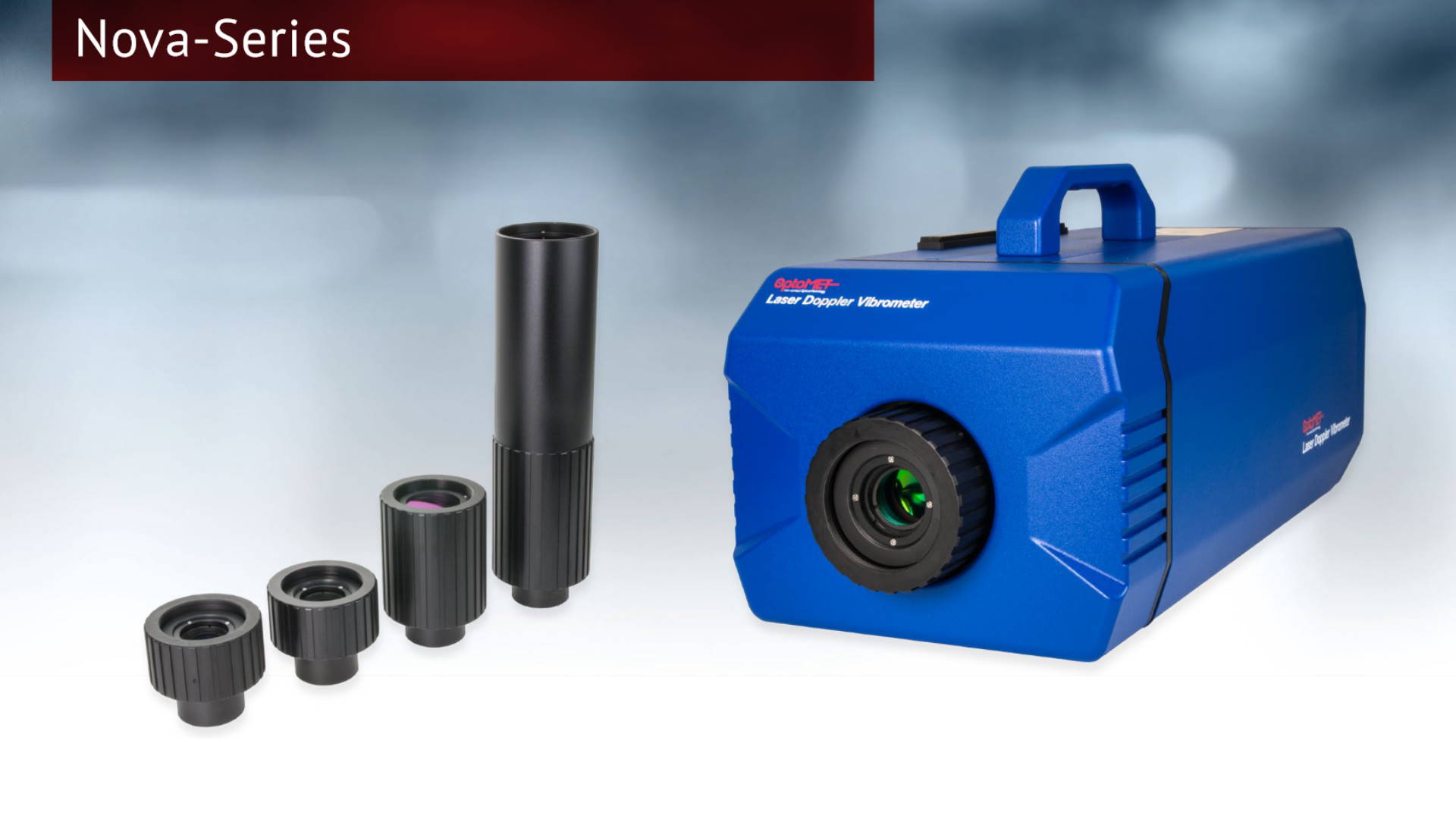
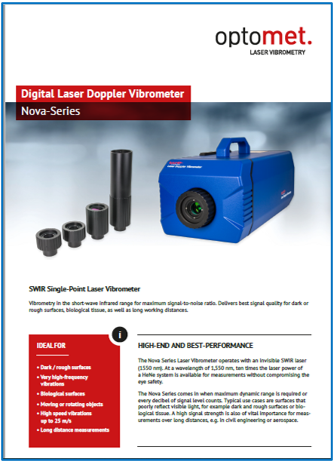
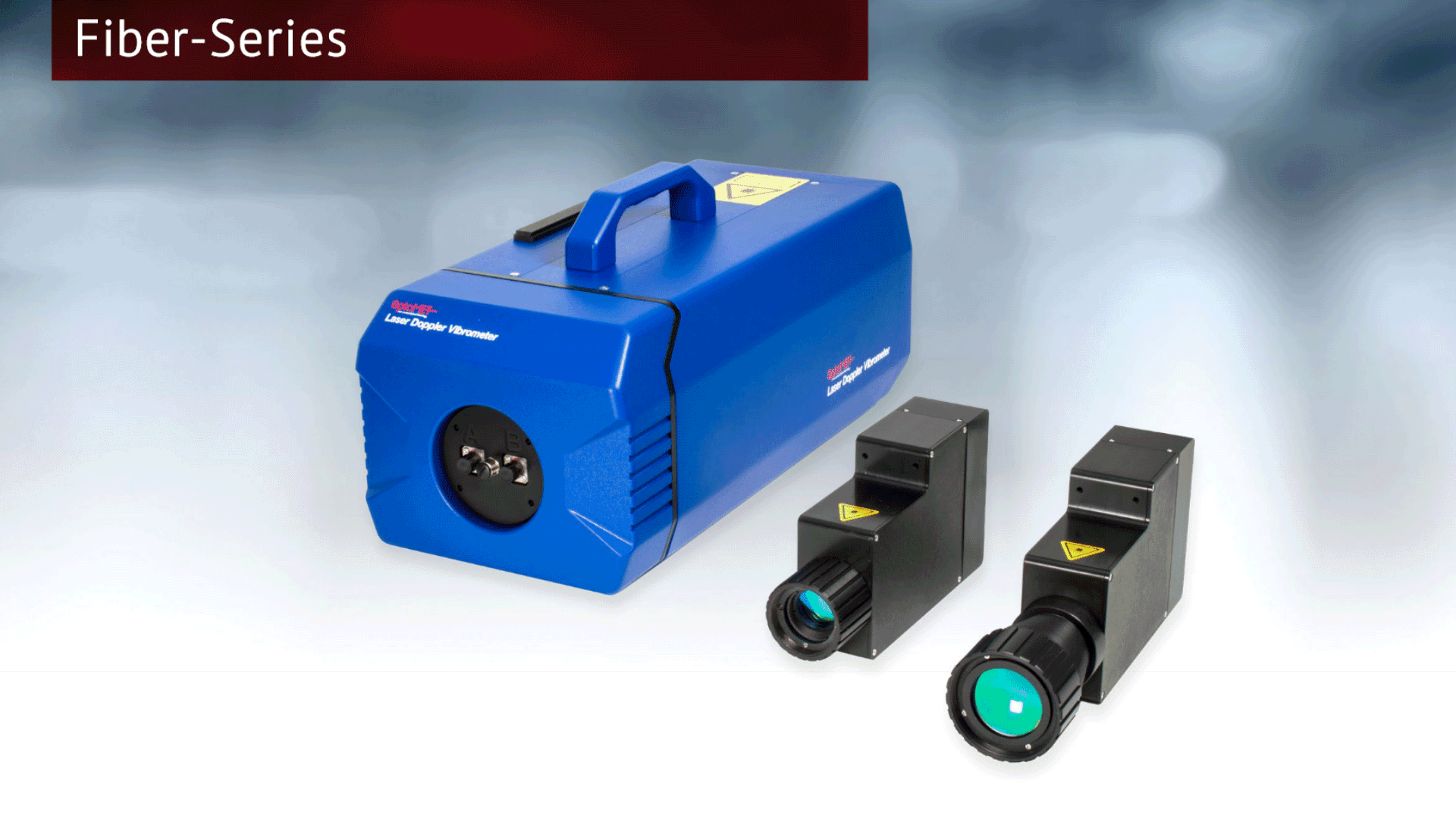
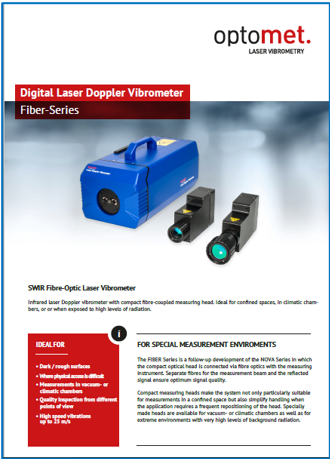
OPTOMET IS PLEASED TO ILLUSTRATE ITS LATEST PRODUCTS

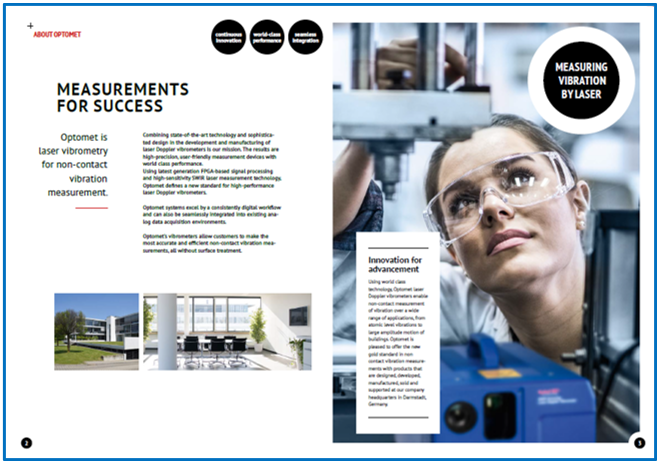
Combining state-of-the-art technology and sophisticated design in the development and manufacturing of laser Doppler vibrometers is our mission. The results are high-precision, user-friendly measurement devices with world class performance.
Using highly integrated UltraDSP signal processing and high-sensitivity laser measurement technology in a single enclosure, Optomet definesa new standard for high-performance laser Doppler vibrometers.
Optomet systems excel by a consistently digital workflow and can also be seamlessly integrated into existing analog data acquisition environments.
Click on the image to open the brochure ⇓
Click on the image to open the brochure ⇒
Click on the image to open the brochure ⇒
Click on the image to open the brochure ⇒
Click on the image to open the brochure ⇒
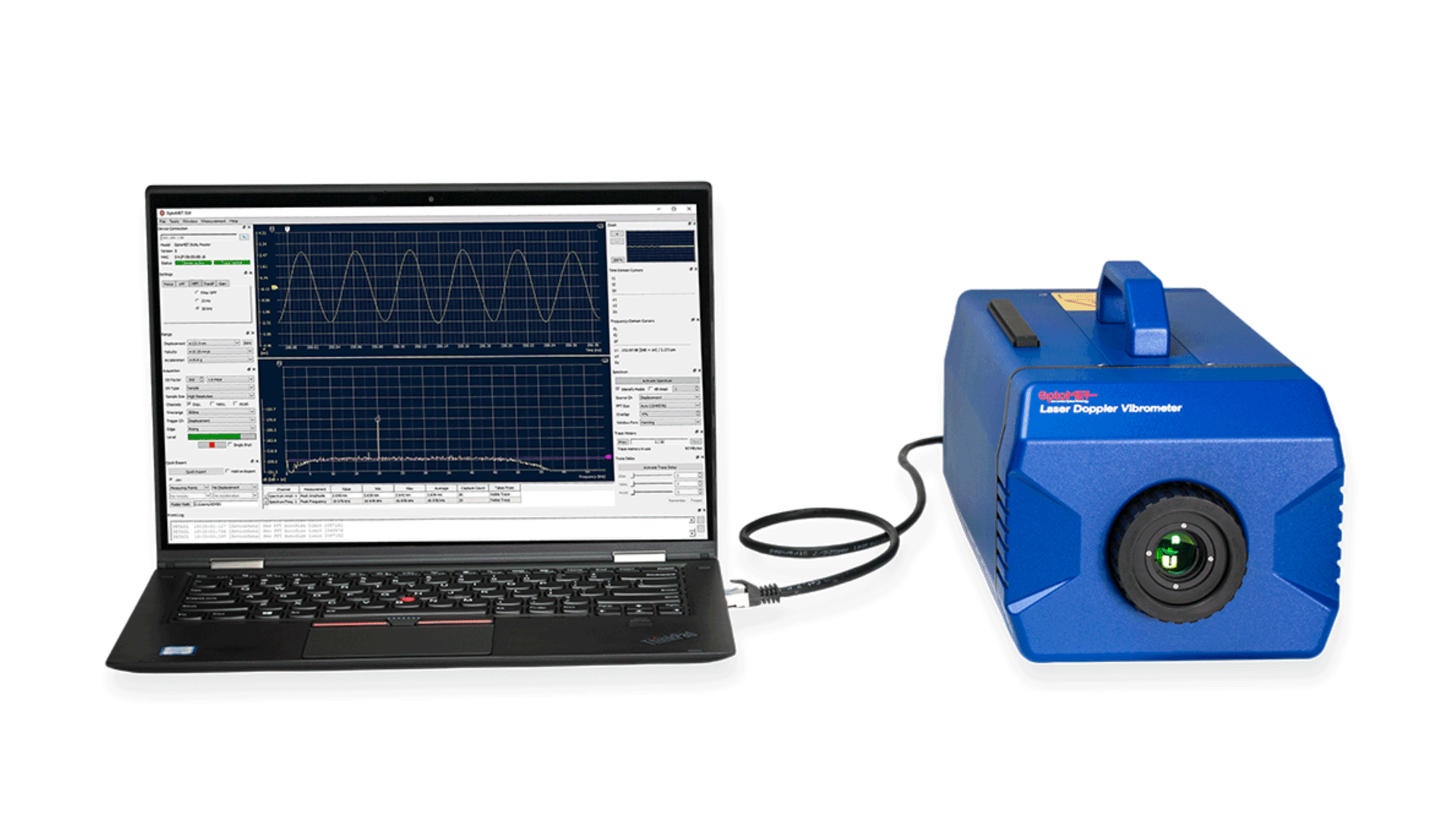
OptoGUI – For single-point Vibrometers
The OptoGUI software for single-point vibrometers enables remote control of the vibrometer as well as acquisition, analysis and export of the measurement data via Ethernet interface.
Polytec
POLYTEC IS PLEASED TO ILLUSTRATE ITS LATEST PRODUCTS
POLYTEC – Shaping the future since 1967
As an innovative high-tech company, Polytec provides cutting edge optical measurement solutions to researchers and engineers. Our commitment is to provide the most precise and reliable optical measurement systems and sensors available for non-contact measurement of vibration, length, speed, surface topography and for process analytics. Polytec instruments help to solve pressing application challenges both in R&D and manufacturing quality and process control, they help our customers to maintain and advance the leading position in their field.
Polytec’s laser vibration measurement technology in particular is the global standard in research, product development and quality assurance. Applications range from condition monitoring of machinery and equipment, to acoustic and failure analysis on e.g. gears and drives, to validation of simulation models on prototypes from the mirco to the macro world. Another focus is on optical systems and solutions for 3D surface metrology.
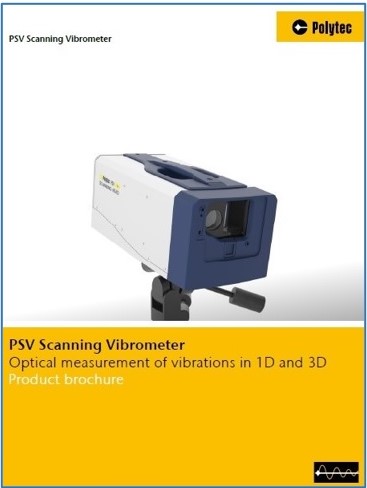
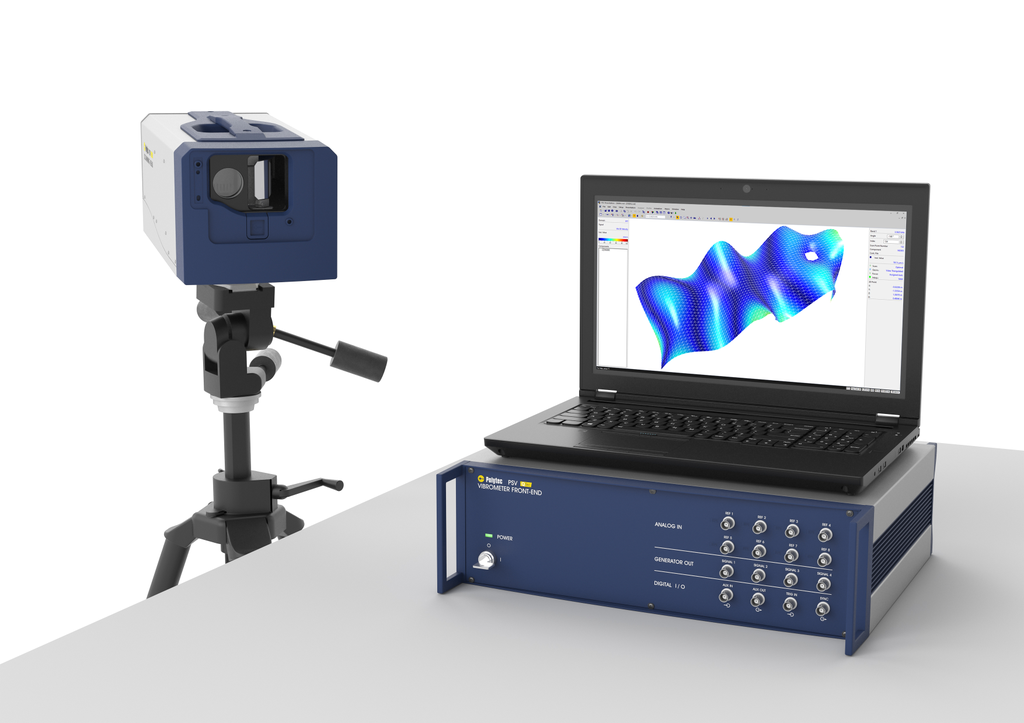
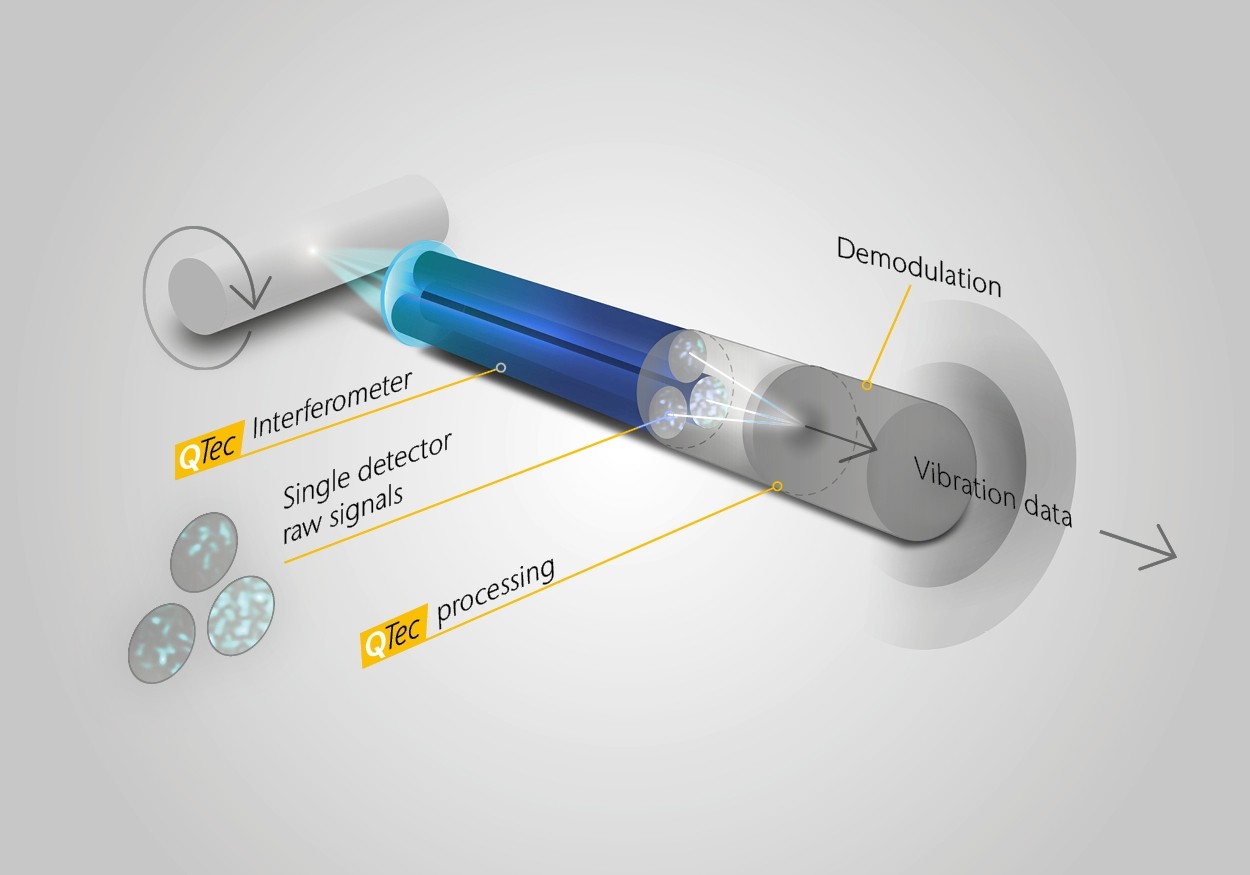
PSV QTec® – Reinventing Optical Vibration Mapping
With the new generation of the PSV QTec® Scanning Vibrometer, Polytec presents a completely new technology, which is nothing less than a revolution in the full-field optical measurement of vibration deflection shapes. With QTec®, Polytec has achieved a decisive breakthrough. Best signal-to-noise ratio on all surfaces makes measurements up to ten times faster and increases the usable resolution by up to 20 dB. This gain in data quality and test efficiency is especially crucial where optical vibration measurement can already show its advantages as a non-contact, non-invasive test method. The patented QTec® Scanning Laser Doppler Vibrometry makes the decisive difference in data quality and significance.
Click on the image to download the brochure ⇒
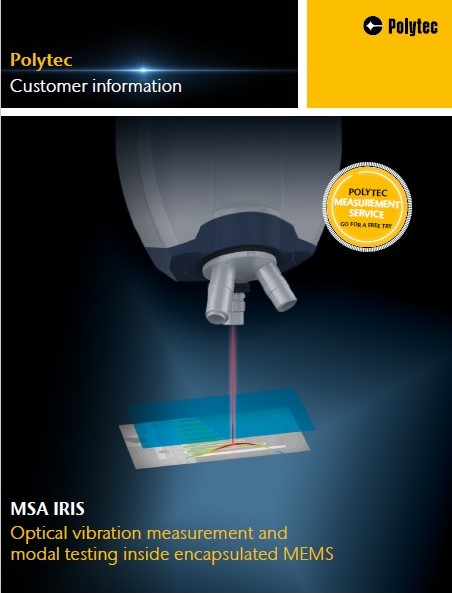
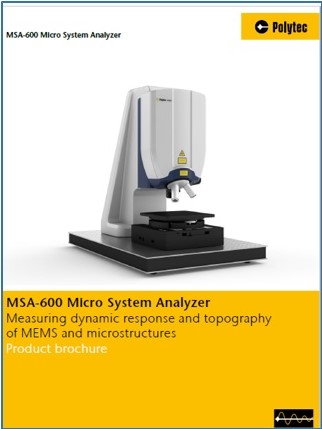
MSA-650 IRIS Micro System Analyzer – Microscope-based vibrometers
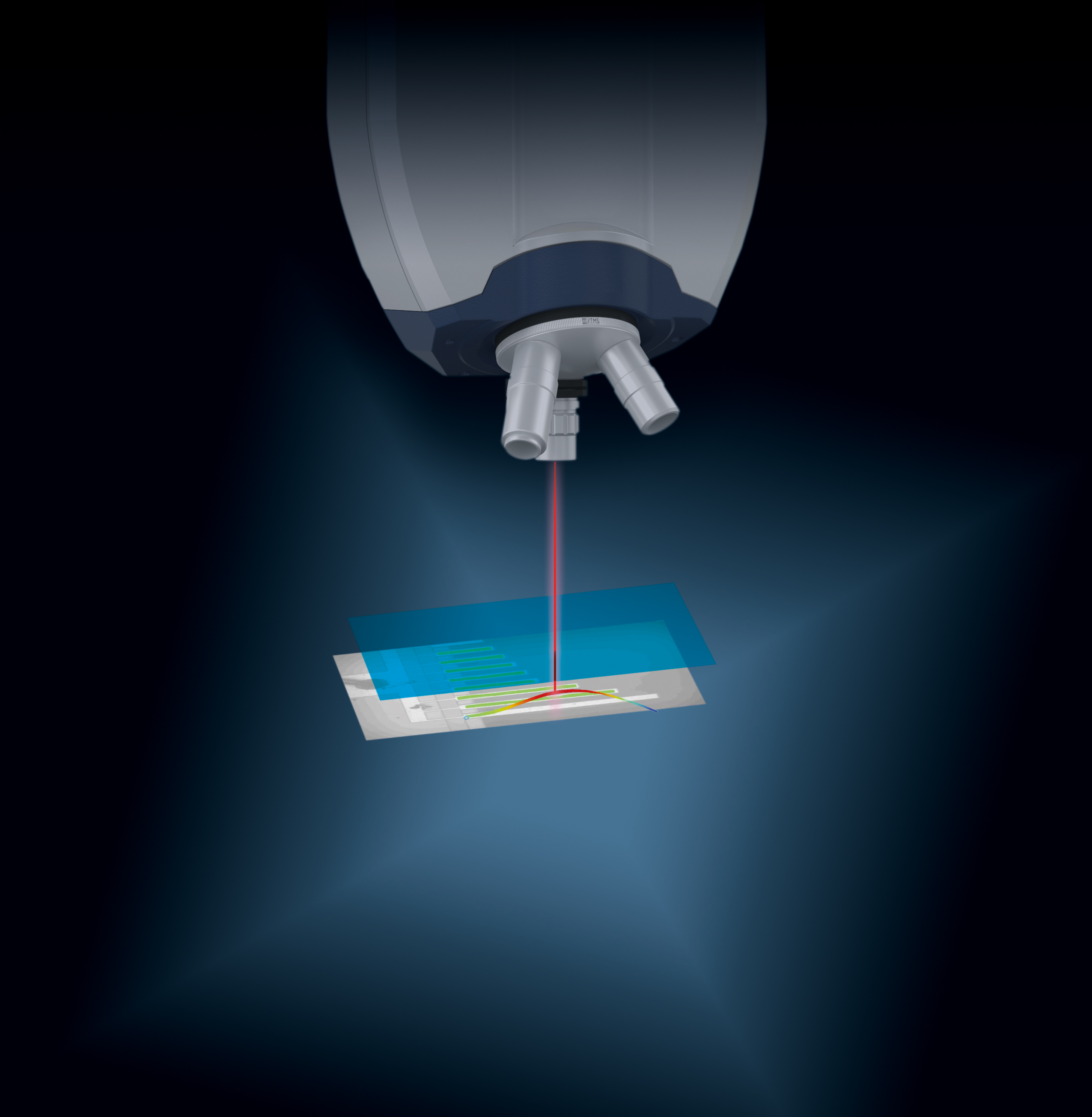
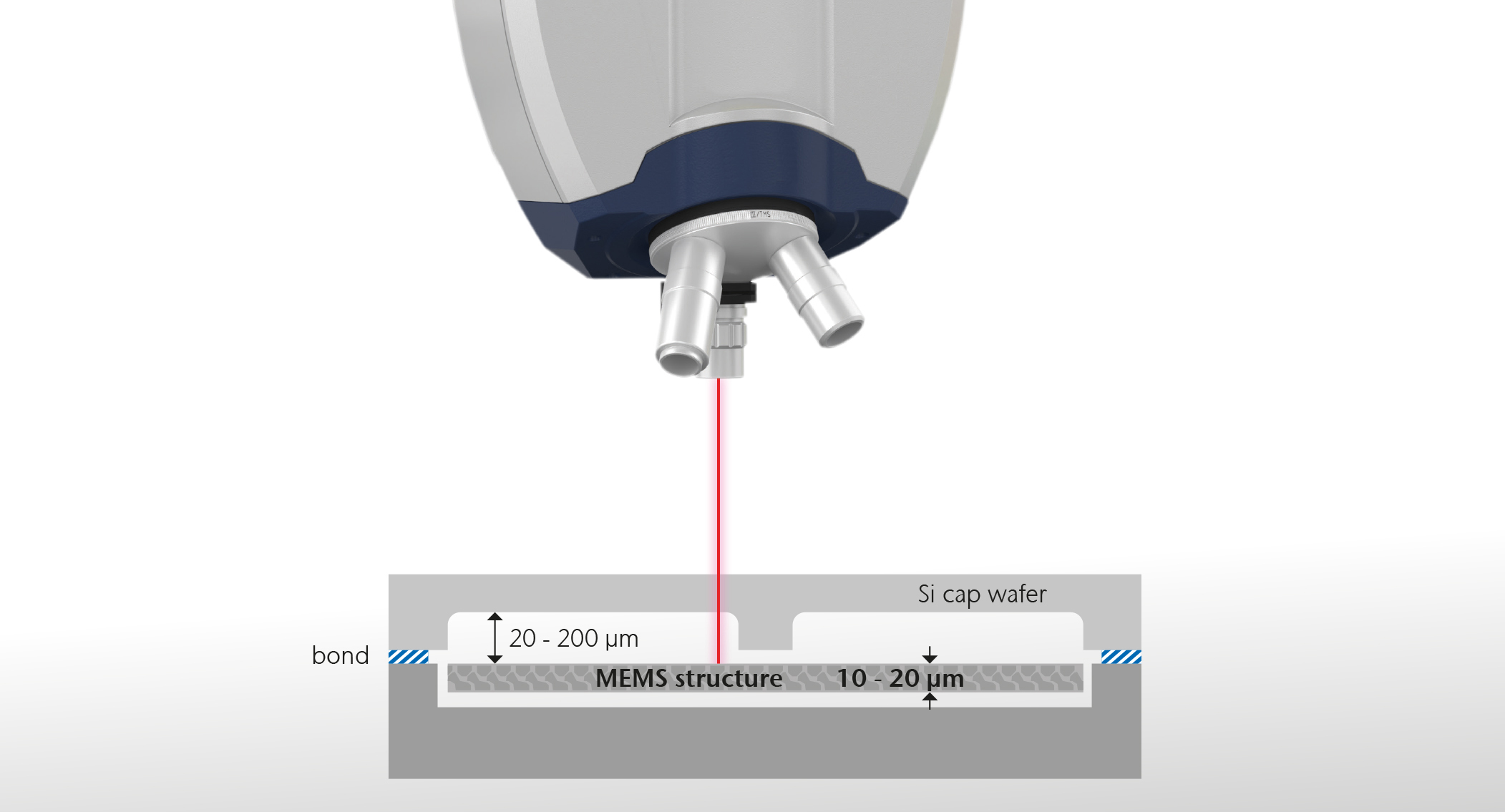
Optical characterization of dynamics on Si-capped MEMS
Visualization of dynamic response is key to testing and developing MEMS devices. This is indispensable for validating FE calculations and determining cross-talk effects. The innovative and patented MSA-650 IRIS Micro System Analyzer allows for measuring true MEMS dynamics by characterizing both in-plane and out-of-plane motions through silicon encapsulation without contact, without need for preparing nor decapping the device. The step of MEMS capping in fabrication processes may result in additional stress, which might alter the device performance. Therefore, a comprehensive characterization of the MEMS device in its final and encapsulated state is needed and indispensible.
Click on the image to open the brochure ⇒

Service and support
PolyXpert engineering services, system rentals and technical support
Polytec has at its disposal a global distribution network with branches in Europe, the USA and Asia and has dealers in all five continents.
This global service network means you can be sure that your needs in the field of optical measuring systems and components as well as contactless vibration measurement technology will be met quickly and comprehensively – regardless of where you require our assistance. In short, wherever you are – we’re at your side.
Click on the image to download the brochure ⇓

 Contact us now!
For any questions you may have,
I am looking forward to your call or email:
Dipl.Phys. Thomas Karasinski
Sales International
Phone: +49 7243 604-1030
Mobile: +49 172 7275632
E-Mail: t.karasinski@polytec.de
SmarAct
SMARACT IS PLEASED TO ILLUSTRATE ITS LATEST PRODUCTS

Vibration Measurements
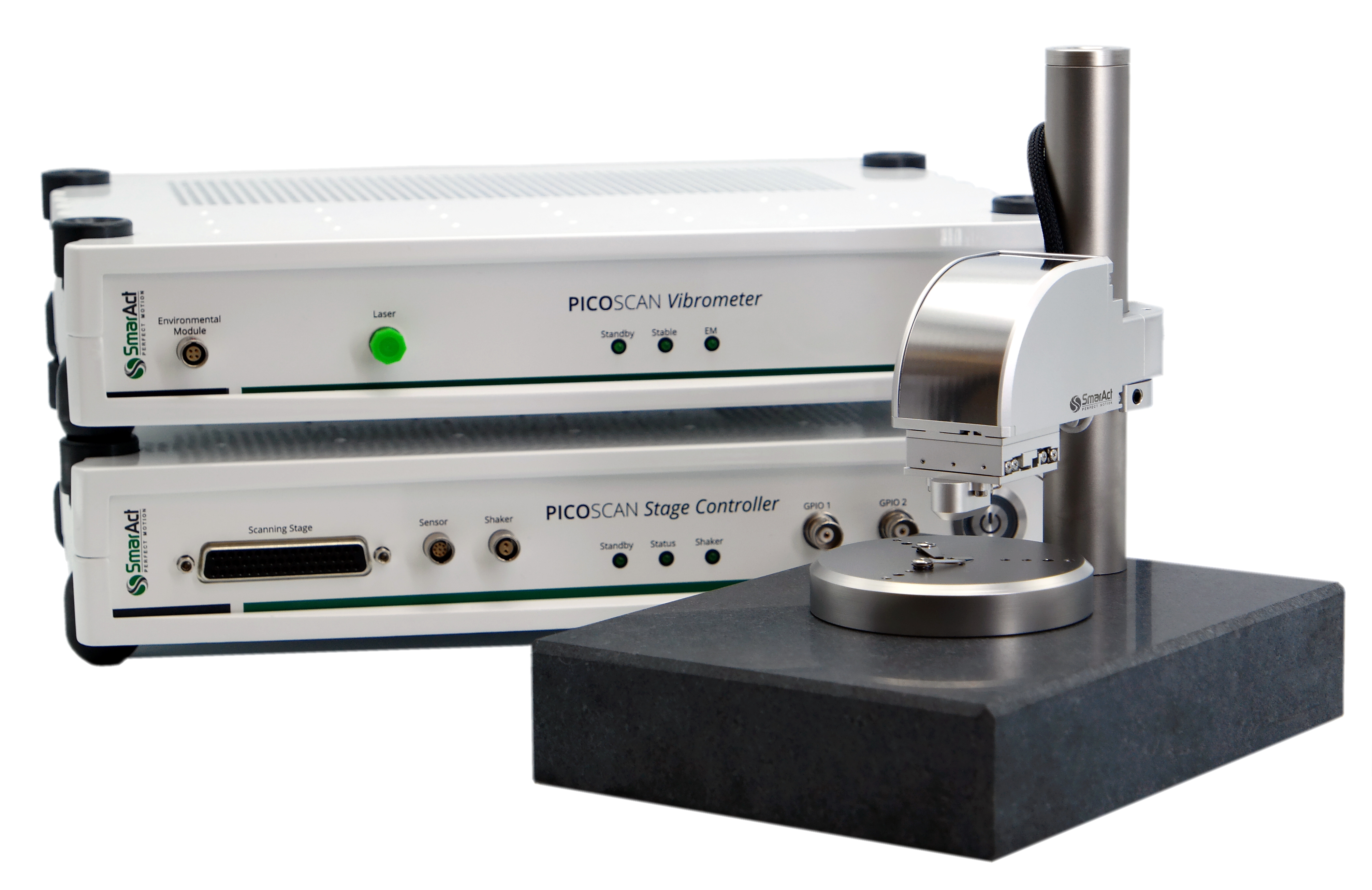
PICOSCALE Vibrometer for the modal analysis of small samples
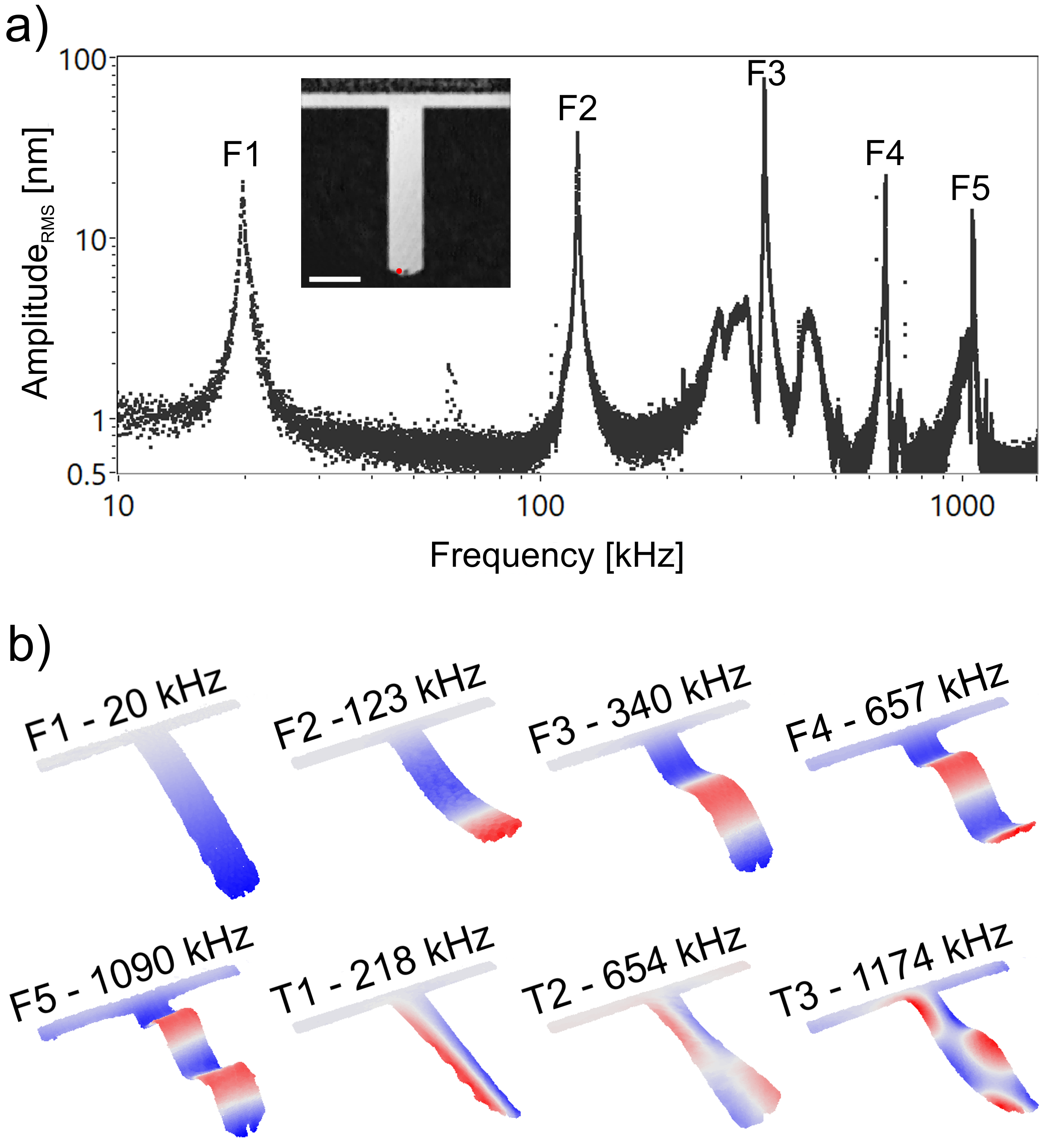
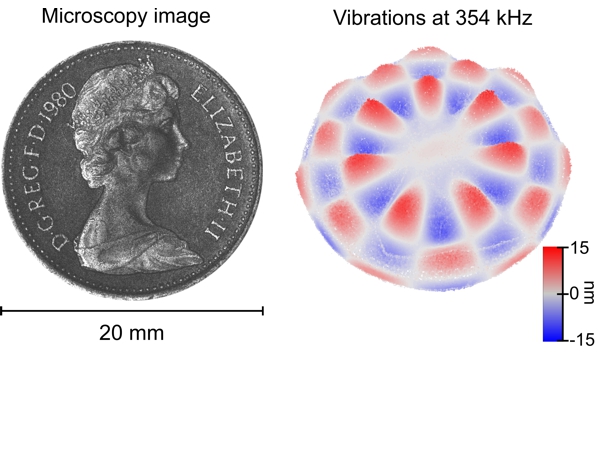
The PICOSCALE Vibrometer is a turnkey solution to measure vibrations of micromechanical structures with sizes that range from just a few µm to multiple cm. Applications include the testing of MEMS, sensors, miniature loudspeakers but also bearings and actuators. Because the instrument is equipped with an integrated microscope and can measure up to 1 million pixels, it is excellently suited to visualize vibrational modes at high spatial and temporal resolution.
- Contactless measurements with light
- Scanning laser interferometer to measure out-of-plane motion (in the direction of the laser beam)
- Measurement bandwidth up to 2.5 MHz (10 MHz sample rate) with a resolution under 1 pm
- Integrated infrared confocal microscope with an optical resolution down to 2 µm
- Modal analysis of encapsulated MEMS
- Stroboscopic imaging of in-plane motion (perpendicular to the direction of the laser beam)
- Turn-key instrument complete with shaker stage